
Most people come to yoga through a pose. They stay because of something deeper — a pull toward questions the postures themselves cannot answer.
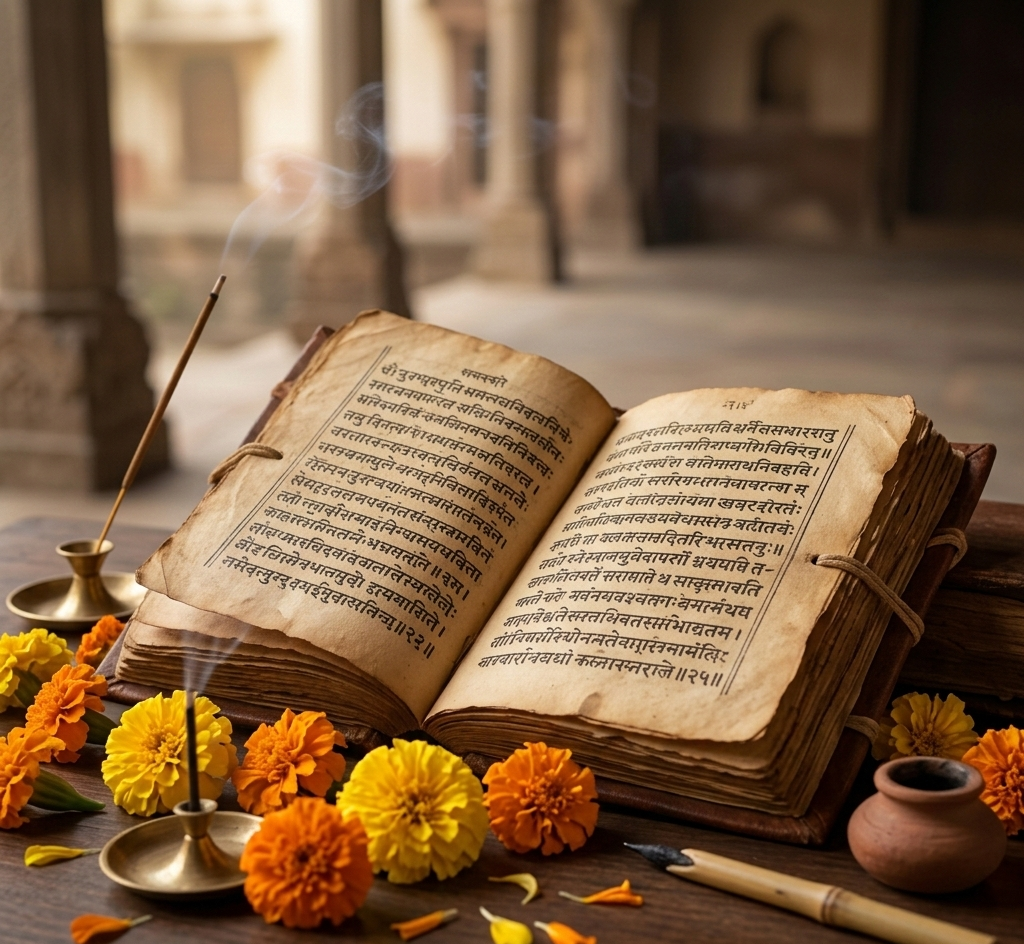
That pull has a source. It lives in a small number of ancient Sanskrit texts that have shaped how millions of people across thousands of years have understood the mind, the self, and the nature of suffering. This article is a structured guide to the most important of those texts — what they contain, why they matter, and how serious students actually begin engaging with them.
Why Sanskrit Texts Are the Foundation of Yoga
Here is what most people miss — yoga philosophy and yoga postures developed almost independently for centuries. The poses came much later.
The oldest and most authoritative yoga texts are not about physical practice at all. They are explorations of consciousness, liberation, action, and the architecture of the human mind. Sanskrit — the language they were written in — was not chosen arbitrarily.
It is a precision language in which individual words carry layers of meaning that no translation fully captures. The word yoga itself means union, discipline, and method simultaneously.
The word chitta means not simply “mind” but the entire field of consciousness including memory, ego, and perception.
Understanding even a handful of core Sanskrit terms changes how a practitioner reads these texts and how they understand their own experience on the mat and off it.
The Yoga Sutras of Patanjali — The Architecture of the Mind
The Yoga Sutras, compiled by the sage Patanjali somewhere between 400 BCE and 400 CE, are arguably the single most referenced text in the entire yoga tradition.
They consist of 196 short aphorisms — sutras means threads — organised into four chapters called Padas.The surprising truth? The Yoga Sutras mention asana exactly once.
The text is primarily a psychological and philosophical manual for understanding how the mind creates suffering and how that suffering can be dissolved.
Patanjali’s central claim is stark: yoga is the cessation of the fluctuations of the mind (Yogas chitta vritti nirodhah — Sutra 1.2). Everything else in the text — the eight limbs, the concept of samadhi, the discussion of obstacles — flows from this single insight.
The Eight Limbs and Why They Are Misunderstood
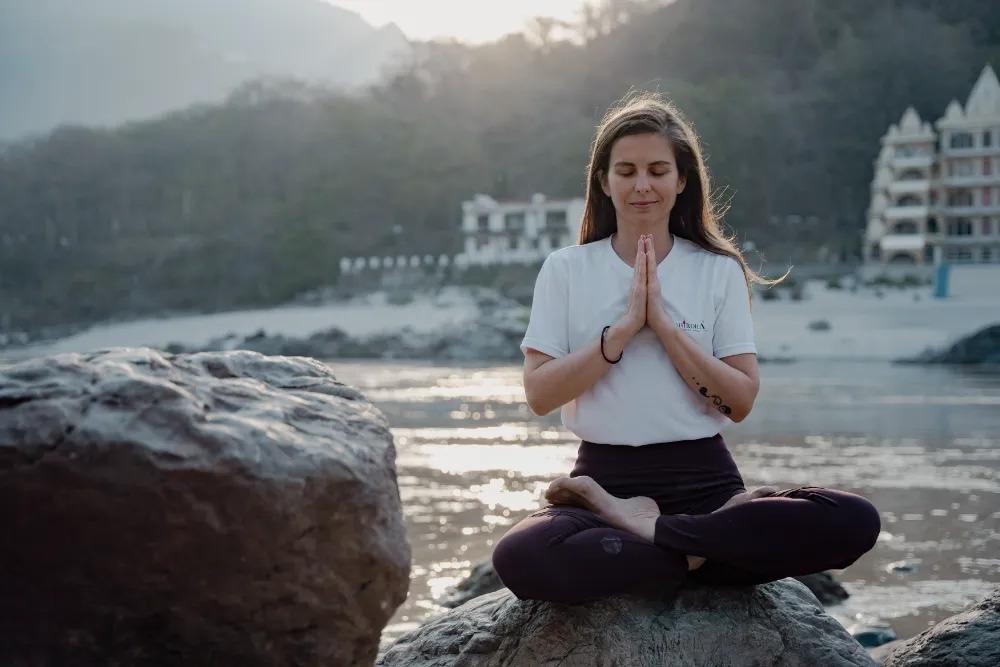
The Ashtanga system described in the Sutras is widely known but widely misread. Most people treat the eight limbs as a sequence — do this, then that, then this. Patanjali presents them as mutually supporting practices, not a ladder.
Ethical restraints (yamas), personal disciplines (niyamas), posture (asana), breath extension (pranayama), withdrawal of senses (pratyahara), concentration (dharana), meditation (dhyana), and absorption (samadhi) are meant to reinforce each other simultaneously.
For practitioners today, beginning #pranayama and morning meditation# as a daily pairing is one of the most direct ways to start living inside the Sutras rather than just reading them.
The Bhagavad Gita — Action, Devotion, and the Nature of the Self
The Bhagavad Gita — the Song of the Divine — sits within the larger epic of the Mahabharata. It is a dialogue between the warrior Arjuna and his charioteer Krishna, who reveals himself to be divine, set on a battlefield just before a catastrophic war begins.
Want to know the best part? The Gita is not a text about war. The battlefield is universally understood in yogic tradition as a metaphor for the inner conflict every human being faces — between duty and desire, action and attachment, the lower self and the higher self.
The Gita’s contribution to yoga philosophy is immense across three dimensions.
- Jnana yoga — the path of knowledge and discernment.
- Bhakti yoga — the path of devotion and surrender.
- Karma yoga — the path of action performed without attachment to results.
Krishna’s teaching on karma yoga in particular — do the action, release the fruit — is one of the most psychologically sophisticated concepts in any philosophical tradition anywhere in the world.
Why Bhakti Yoga Is Underappreciated in Western Practice
In most Western yoga studios, bhakti practice is either absent or reduced to chanting. In the Gita’s framework, bhakti is a complete path — one that transforms the practitioner’s relationship to every experience.
Soft, sustained practices like yin yoga courses — which ask the practitioner to remain still, surrender resistance, and simply be present — carry a genuine bhakti quality even when they are not taught that way.
The Upanishads — Where Philosophy Becomes Inquiry
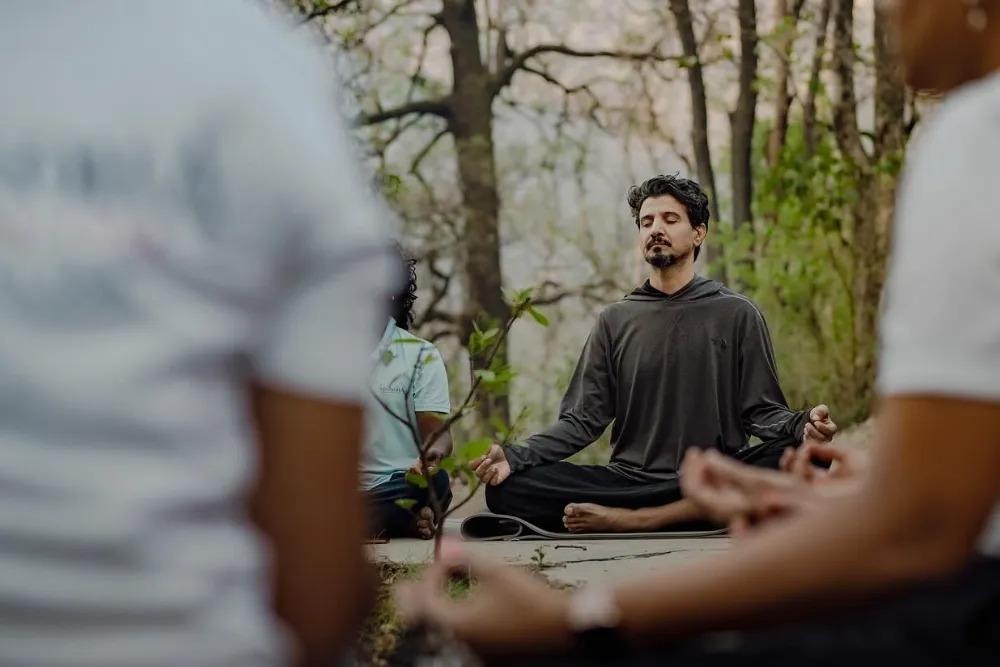
The Upanishads are not a single text but a collection of over 100 philosophical dialogues composed over several centuries, the earliest dating to around 800 BCE. The word Upanishad itself means sitting down near — a reference to the intimate transmission between teacher and student.
The central preoccupation of the Upanishads is identity. Ko’ham — who am I? The Mandukya Upanishad, one of the shortest at just 12 verses, maps the four states of consciousness — waking, dreaming, deep sleep, and the fourth state (turiya) — and argues that the deepest self is the witness of all three. The Brihadaranyaka Upanishad explores the nature of Brahman — the universal consciousness — and the relationship between individual awareness (atman) and universal awareness.
The famous formulation Tat tvam asi — That thou art — from the Chandogya Upanishad encapsulates the Upanishadic project in three words. The individual self and the universal self are not two separate things. This is not mysticism. It is a philosophical proposition with profound practical implications for how a practitioner understands their own mind, ego, and place in the world.
The Hatha Yoga Pradipika — Bridging Body and Spirit
Composed in the 15th century by the sage Swatmarama, the Hatha Yoga Pradipika is the foundational text for what most people in the modern world recognise as yoga.
It describes asanas, pranayama, mudras, bandhas, and the concept of kundalini energy moving through the subtle body.
Here is the critical thing — Swatmarama is explicit that physical practice is not an end in itself. Every technique in the text is described as a preparation for meditation and ultimately for samadhi.
The body is not the destination. It is the vehicle. The Pradipika also contains early descriptions of nadis — the energy channels of the subtle body — and the chakra system that has become so widely referenced in modern yoga culture.
What These Texts Have in Common
Despite their different forms, authors, centuries, and stylistic approaches, these texts share a set of core convictions.
The ordinary human mind is clouded by conditioning, habit, and the false identification of the self with the ego. Clarity is available. It requires practice, inquiry, and transmission from someone who has walked the path before.
This is precisely why the tradition of studying these texts within a living lineage — not just reading translations alone — has persisted for over two thousand years.
A teacher who has genuinely absorbed these texts changes how they are understood. The words come alive differently when transmitted by someone who has practiced what they describe.
For those seeking to engage with yoga philosophy in this living way, the Adhiroha #yoga philosophy & lifestyle handbook# offers a thorough look at how these teachings are integrated into full ashram training — covering subjects from Bhakti yoga and pranayama to Vedic mantra chanting and daily philosophical study as practiced in a traditional Himalayan ashram setting.
How to Actually Start Reading Sanskrit Texts
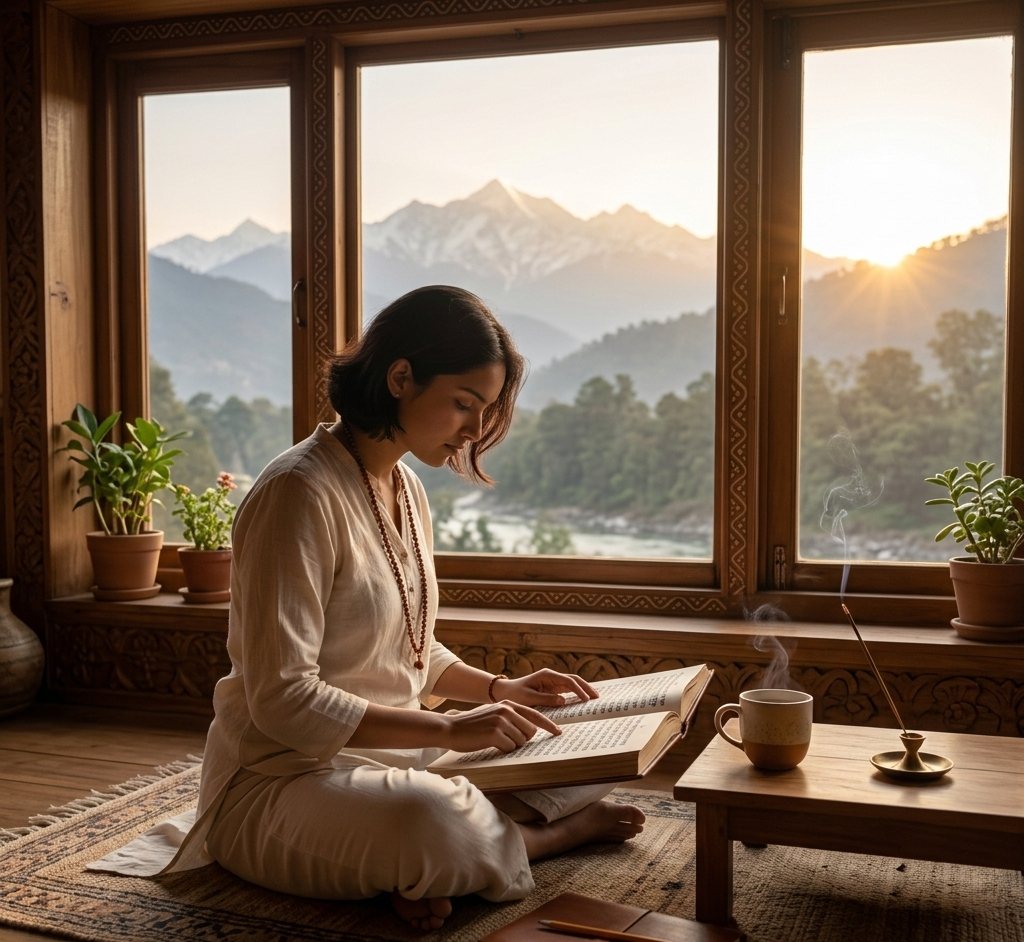
The intimidation factor is real. The texts are dense, the translations vary enormously, and the concepts are genuinely unfamiliar to most Western readers. Here is a practical approach that works.
Start with a translation that includes commentary. Swami Satchidananda’s commentary on the Yoga Sutras, Edwin Bryant’s scholarly translation, and Eknath Easwaran’s accessible version of the Bhagavad Gita are all respected starting points.
Do not read these texts like novels — read a small amount slowly, then sit with what arose. The point is reflection, not completion.
Pair reading with a practice that puts the concepts in the body. A student who reads Patanjali’s discussion of dharana while also practising concentration in their physical sessions understands it differently than someone reading in the abstract. Yoga teacher training in Rishikesh programmes that integrate philosophy study with daily practice — covering texts like the Gita and Sutras alongside asana, pranayama, and meditation — offer exactly this kind of embodied learning that a bookshelf alone cannot replicate.