

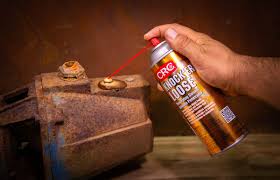
Rust can turn even the simplest maintenance task into a frustrating challenge. A bolt that once moved easily can become completely locked in place. A hinge that once rotated smoothly may refuse to budge. For maintenance professionals, mechanics, and engineers, rusted components are an everyday problem that can slow down repairs and increase operational costs.
One of the most reliable solutions to this issue is penetrating oil. While it may seem like a simple fluid applied to stuck metal parts, the science behind its effectiveness is surprisingly complex. Penetrating oil works through a combination of chemistry, physics, and material interaction to break down rust and restore movement between metal surfaces.
Understanding the science behind how penetrating oil works can help technicians use it more effectively. It also explains why certain formulations are considered the best penetrating oil for aluminum and other sensitive metals. By exploring the mechanisms that allow penetrating oil to dissolve rust and penetrate tight spaces, we gain insight into why this tool is essential for modern industrial and mechanical maintenance.
Understanding What Rust Really Is
To understand how penetrating oil works, it is important to first understand the nature of rust itself. Rust is a form of corrosion that occurs when iron or steel reacts with oxygen and moisture. This reaction produces iron oxide, a flaky material that forms on the surface of metal.
Unlike the original metal surface, rust has a rough and porous structure. As it forms, it expands and pushes against surrounding metal components. This expansion can lock bolts, nuts, and other fasteners together.
The structure of rust also allows it to trap moisture and oxygen, which accelerates the corrosion process. Over time, the rust layer grows thicker and more stubborn, making mechanical separation extremely difficult.
Because rust behaves like a binding layer between metal surfaces, removing it requires a substance capable of penetrating the microscopic gaps within the corrosion. This is where penetrating oil becomes effective.
The Physics of Penetration and Capillary Action
One of the most important scientific principles behind penetrating oil is capillary action. This is the same physical phenomenon that allows liquids to travel through narrow spaces without the assistance of external forces.
Penetrating oil is formulated with very low viscosity, meaning it flows easily and spreads quickly. When applied to a rusted joint or fastener, the oil begins to seep into the tiny gaps between the metal surfaces and the rust layer.
Capillary action draws the oil deeper into these narrow spaces. Even microscopic channels between rust particles allow the oil to travel downward and reach the root of the corrosion.
As the oil spreads, it coats both the rust particles and the metal beneath them. This penetration process is critical because surface level lubrication alone cannot break the bond between rusted parts.
The ability to travel through extremely small openings is what makes penetrating oil effective at loosening seized components that appear completely solid.
Chemical Interaction With Rust
Beyond physical penetration, penetrating oil also works through chemical interaction with rust. Many formulations include additives designed to weaken the oxide structure that forms during corrosion.
Rust is brittle compared to solid metal. When penetrating oil reaches the rust layer, it begins to infiltrate the pores and cracks within the oxide structure. This infiltration helps separate the rust particles from the metal surface.
Certain additives in penetrating oil also react with oxidation products, softening the rust and making it easier to break apart. As the rust structure weakens, the bond between the metal components begins to loosen.
This chemical process does not necessarily dissolve rust instantly. Instead, it destabilizes the corrosion layer so that mechanical force can safely separate the parts.
The combination of chemical weakening and deep penetration is what makes penetrating oil so effective in maintenance work.
Lubrication and Friction Reduction
Another important function of penetrating oil is lubrication. Once the oil reaches the contact surfaces between two metal components, it begins reducing friction.
Rusted metal surfaces are rough and uneven. When these surfaces attempt to move against each other, the friction can be extremely high. This friction often causes bolts to snap or threads to strip during removal.
Penetrating oil forms a thin lubricating film between the surfaces. This film allows the components to slide more easily once the rust bond begins to break.
Reducing friction is essential because it prevents additional mechanical damage during the loosening process. Instead of forcing the parts apart with excessive torque, technicians can gently work the fastener free.
This lubricating property is especially important when working with delicate metals such as aluminum.
Why Aluminum Requires Special Consideration
Aluminum components present unique challenges when dealing with corrosion. While aluminum does not form rust in the same way that steel does, it can develop a form of oxidation that causes parts to seize.
In many machines and vehicles, aluminum components are combined with steel fasteners. Over time, this combination can lead to a phenomenon known as galvanic corrosion. This occurs when two different metals react in the presence of moisture, creating an electrochemical bond.
When galvanic corrosion forms, the fastener can become tightly locked within the aluminum component. Attempting to remove it without proper lubrication can damage the softer aluminum threads.
For this reason, technicians often search for the best penetrating oil for aluminum when working with mixed metal assemblies. The ideal formulation must penetrate effectively while remaining gentle enough to avoid damaging sensitive materials.
Penetrating oil designed for these situations typically includes additives that reduce friction and prevent metal surface damage.
Moisture Displacement and Corrosion Prevention
Another scientific principle that makes penetrating oil effective is its ability to displace moisture. Water plays a central role in the corrosion process because it enables the chemical reaction between metal and oxygen.
When penetrating oil enters a rusted joint, it pushes moisture away from the metal surfaces. This displacement interrupts the corrosion cycle and slows further oxidation.
Many penetrating oils also contain corrosion inhibitors. These compounds form a protective barrier that shields the metal from air and humidity.
Although penetrating oil is primarily used to loosen rusted components, this protective effect helps prevent immediate re corrosion after the repair is completed.
In environments where equipment is exposed to humidity or water, this feature provides valuable temporary protection.
The Role of Time in Rust Breakdown
One important factor in the effectiveness of penetrating oil is time. While the oil begins working immediately after application, its full effect often requires patience.
The oil needs time to travel through the rust structure, penetrate the joint, and interact with corrosion products. Allowing sufficient soaking time enables the oil to reach deeper areas that would otherwise remain inaccessible.
For severely rusted components, technicians may apply penetrating oil several times and allow it to work gradually. Each application helps weaken the rust layer further.
This slow process may seem simple, but it relies on the combined effects of capillary action, chemical interaction, and lubrication.
Understanding this process allows technicians to use penetrating oil more strategically during maintenance tasks.
Modern Advances in Penetrating Oil Technology
The science behind penetrating oil continues to evolve as researchers develop more advanced formulations. Modern products often include specialized additives designed to improve penetration speed and corrosion breaking ability.
Some formulations use advanced surfactants that reduce surface tension even further. Lower surface tension allows the oil to spread more easily across metal surfaces and travel deeper into rusted joints.
Other formulations incorporate advanced corrosion inhibitors that provide longer lasting protection after the rust is removed.
These innovations help maintenance professionals work more efficiently and reduce the risk of equipment damage during repairs.
For industries that rely on complex machinery, improved penetrating oil technology plays a critical role in maintaining productivity.
The effectiveness of penetrating oil is not simply the result of lubrication. It is the outcome of several scientific processes working together. Capillary action allows the oil to travel into microscopic gaps, chemical additives weaken the rust structure, and lubrication reduces friction between metal surfaces.
These combined effects allow penetrating oil to break down corrosion and restore movement in seized components. Whether working with steel fasteners, complex machinery, or delicate materials such as aluminum, understanding the science behind penetrating oil helps technicians achieve better results.
Selecting the right formulation, especially when searching for the best penetrating oil for aluminum, ensures that rusted parts can be loosened safely and efficiently.
By applying penetrating oil correctly and allowing it time to work, maintenance professionals can transform stubborn rust problems into manageable repairs. In doing so, they extend the life of equipment and keep mechanical systems operating smoothly for years to come.