
For decades, the “gold standard” of dental diagnostics has involved a familiar, often unpleasant ritual: biting down on a rigid, plastic sensor that presses against the delicate tissues of your gums and the floor of your mouth.
For many Australians, this “bitewing” procedure is the most stressful part of a check-up, often triggering a strong gag reflex or physical discomfort. However, recent data suggests that the dental experience is rapidly evolving to address these barriers.
According to the Australian Institute of Health and Welfare (AIHW), nearly 1 in 6 Australian adults (16.4%) report high levels of dental fear or anxiety, which often leads to the avoidance of essential care.
To combat this, modern clinics are increasingly adopting Panoramic X-ray technology (also known as an OPG). By capturing a complete view of the mouth from the outside, this technology offers a “no-touch” alternative that prioritizes patient comfort without sacrificing diagnostic precision.
The Evolution of the “Big Picture”
While traditional bitewing X-rays are excellent for spotting tiny cavities between teeth, they offer a very narrow field of vision. It often takes four to six separate exposures—and four to six uncomfortable placements—to map the back of the mouth.
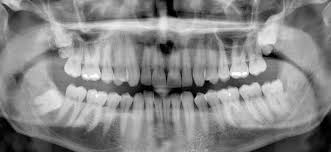
A panoramic x ray clinic, however, captures the entire mouth in a single, 20-second rotation. The machine’s arm moves in a semi-circle around your head while you stand or sit perfectly still. In one sweep, it captures:
All upper and lower teeth (including unerupted wisdom teeth).
- The entire jawbone structure.
- The temporomandibular joints (TMJ).
- The nasal and sinus cavities.
Why “No Bitewings” Means “No Stress”
For a “Clinic Dentist” in 2026, the shift toward extraoral (outside the mouth) imaging is a key component of trauma-informed care. Here is how panoramic scans solve the primary pain points of dental visits:
1. Eliminating the Gag Reflex
The most significant benefit of panoramic imaging is that nothing goes inside your mouth. For patients with a sensitive gag reflex, traditional sensors can feel invasive and physically distressing. Because the OPG machine stays completely external, this physiological trigger is entirely removed, making the process effortless for those who previously dreaded X-rays.
2. Speed and Efficiency
Anxiety thrives in the “waiting.” Traditional X-rays require a technician to position a sensor, leave the room, take the shot, and return to reposition it multiple times. A panoramic scan is a “one-and-done” event. You simply bite on a small, sterile plastic notch to align your jaw, and the scan is completed in seconds.
3. Ideal for All Ages
Children with small mouths or elderly patients with limited jaw mobility often find it physically painful to accommodate traditional sensors. Panoramic X-rays are “size-agnostic,” meaning they provide the same high-quality data regardless of the patient’s age or mouth size, all while the patient remains in a comfortable, upright position.
Understanding the Safety: The Radiation Myth
A common misconception is that a “larger” X-ray must mean more radiation. In reality, modern digital panoramic machines are incredibly efficient.
The effective radiation dose of a digital OPG typically ranges between 10 to 25 microsieverts. To put that in a real-world context, the average person in Australia receives roughly 1,500 to 2,000 microsieverts of background radiation per year just from the sun and the earth. Choosing a digital panoramic scan is effectively equivalent to the amount of natural radiation you would absorb during a 2-hour commercial flight.
What Your Dentist Sees (That Bitewings Miss)
Beyond the comfort factor, the panoramic scan provides a comprehensive diagnostic roadmap that bitewings simply cannot reach. By looking deeper into the facial structure, your dentist can identify:
- Impacted Wisdom Teeth: It shows the exact angle and depth of wisdom teeth and their proximity to the mandibular nerve, which is essential for safe oral surgery.
- Early Signs of Oral Cancer: The scan can reveal cysts, tumors, or anomalies in the jawbone that would go undetected in smaller images.
- Sinus Health: Because the scan includes the maxillary sinuses, it can help determine if “tooth pain” is actually caused by a sinus infection.
- Bone Density and TMJ Issues: It allows for the assessment of the jaw joints and bone health, which is critical for planning dental implants or orthodontic treatment.
The New Standard of Care
The modern “Clinic Dentist” understands that the best treatment is the one the patient actually shows up for. By removing the “bitewing barrier,” clinics are helping more Australians feel empowered to maintain their oral health.
When diagnostic imaging is as simple as standing still for 20 seconds, the hurdle to booking that next check-up virtually disappears.
If you’ve been delaying your dental visit because of a sensitive gag reflex or a general dislike of traditional X-rays, it’s time to seek out a clinic equipped with modern panoramic technology. It’s faster, safer, and—best of all—entirely hassle-free.
Would you like me to help you find a checklist of other modern dental technologies that can help reduce dental anxiety?